Every driving enthusiast knows the feeling of wanting just a little bit more from their vehicle. Whether you are navigating tight corners or simply merging onto the highway, the desire for enhanced power and responsiveness is universal. When a vehicle rolls off the factory floor, it is usually built with compromises designed to appeal to the broadest demographic while meeting strict regulations. These constraints often leave a significant amount of untapped potential hiding beneath the hood. Unlocking this hidden potential does not require buying a brand new sports car; rather, it involves strategically modifying your current setup to optimize airflow, fuel delivery, and engine management. By exploring effective aftermarket modifications, you can tailor your car’s capabilities to match your exact driving preferences and create a truly engaging machine.
Upgrading the Exhaust System
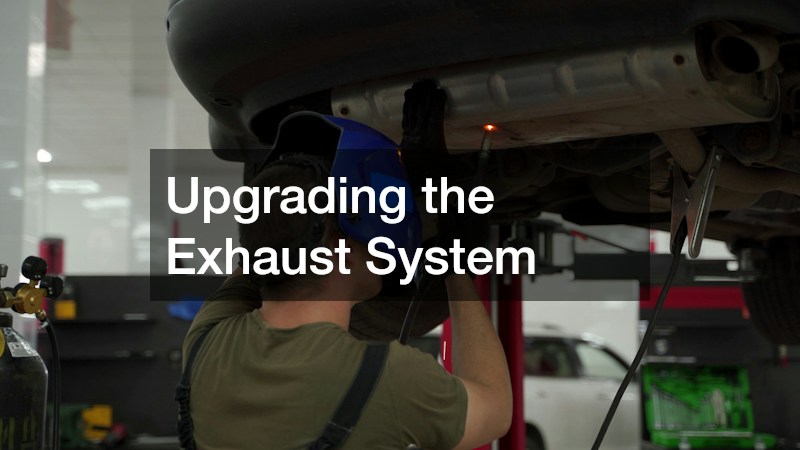
One of the most immediately rewarding modifications you can make to your vehicle is replacing the restrictive factory exhaust components. In a standard combustion engine, generating power relies heavily on how efficiently the engine can expel spent exhaust gases. Factory exhaust systems are generally designed with a focus on maximum sound dampening, which unfortunately results in narrow piping and restrictive mufflers. These bottlenecks create backpressure, forcing the engine to work much harder. By eliminating these restrictions, you allow the engine to breathe much more freely and improve overall efficiency.
When you decide to invest in an aftermarket exhaust, you are actively freeing up trapped horsepower and torque. Upgraded systems utilize wider diameter piping and mandrel bends, which ensure that the pipe remains consistent even through sharp curves, drastically reducing turbulence. Integrating a top-tier performance vehicle part into your exhaust layout also provides a highly aggressive, throaty exhaust note. Drivers will immediately notice an improvement in throttle response, as the engine no longer struggles against its own exhaust flow, making every acceleration phase feel remarkably crisper and much more immediate.
Installing a Cold Air Intake
Another foundational modification that pairs perfectly with an upgraded exhaust is a cold air intake system. Internal combustion engines operate effectively as giant air pumps, meaning that the more air you can pack into the cylinders, the more power you can potentially generate. Factory air boxes are often situated in areas of the engine bay that get incredibly hot, utilizing convoluted tubing that restricts airflow velocity. Warm air is less dense than cold air. By replacing the stock air box, you are opening up the breathing pathways for better overall performance.
A cold air intake specifically relocates the air filter to a cooler area, allowing the engine to ingest a much denser charge of oxygen. This denser air leads to a more robust combustion event when mixed with fuel, translating directly into noticeable increases in both horsepower and torque. While many enthusiasts choose to tackle this installation at home, seeking out a professional auto service can ensure that the sensors are calibrated correctly and the unit is sealed. Beyond the undeniable power gains, a cold air intake also delivers a satisfying induction roar when you accelerate.
Tuning the Engine Control Unit
Modern vehicles are essentially rolling computers, with the Engine Control Unit acting as the central brain dictating every major mechanical function. Manufacturers intentionally program these units with conservative parameters to ensure longevity, prioritize fuel economy, and account for varying fuel qualities across different regions. This safe approach means that your engine is likely operating well below its true mechanical limits straight from the factory. By modifying the software rather than the hardware, drivers can unlock a surprising amount of latent power that has been artificially restricted by these stock settings.
Reprogramming this software, often referred to as flashing or tuning, allows you to adjust critical variables like ignition timing, air-to-fuel ratios, and turbocharger boost pressures. This meticulous calibration creates a much more aggressive and responsive driving dynamic tailored to your specific goals. While some handheld devices offer pre-loaded maps, specialized tuning often requires deep expertise, much like the precision needed for a complex Jaguar repair to ensure everything runs flawlessly. A proper tune not only maximizes horsepower and torque but also smooths out power delivery across the entire RPM range, transforming the overall driving experience.
Adding a Forced Induction System
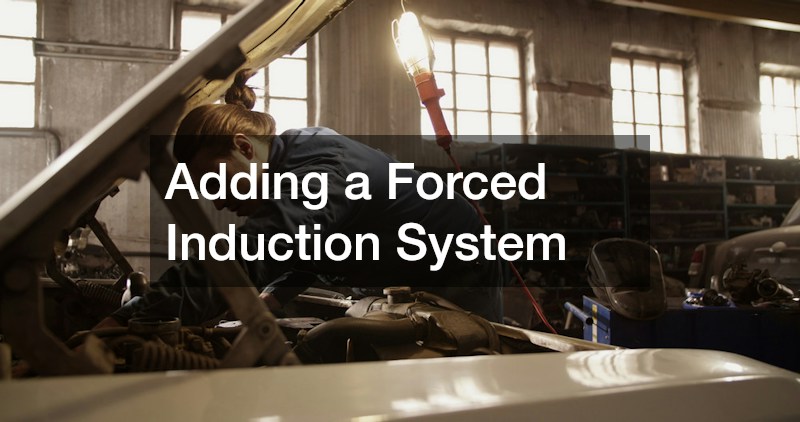
For those who want to see massive, transformative gains in power, adding a forced induction system is the ultimate upgrade path. Naturally aspirated engines rely solely on atmospheric pressure to draw air into the cylinders, which ultimately limits their maximum output potential. Forced induction overcomes this barrier by using an air compressor to actively force a significantly larger volume of air into the combustion chamber. This pressurized environment allows for a proportionately larger amount of fuel to be burned, resulting in power increases that bolt-on modifications simply cannot match.
There are two primary methods to achieve this: turbochargers, which are driven by exhaust gases, and superchargers, which are mechanically driven by the engine’s crankshaft. Both systems offer distinct advantages, with superchargers delivering instant low-end grunt and turbochargers providing massive top-end surges. Because these systems introduce intense stress and internal pressure, installation must be meticulously planned to avoid catastrophic failures that might necessitate a complete engine replacement down the line. Upgrading the fuel delivery and cooling components in tandem with forced induction ensures the vehicle can handle the drastic leap in horsepower safely and reliably.
Enhancing the Suspension Setup
Increasing your engine’s power output is only half the battle when building a high-performance vehicle; you also need the ability to control that power effectively. Factory suspension systems are almost always calibrated to prioritize passenger comfort and a soft ride over aggressive cornering capabilities. This results in significant body roll during tight turns, nose dive under heavy braking, and a general feeling of disconnection from the road surface. To truly harness your vehicle’s capabilities, you must upgrade the suspension components to keep the chassis planted and stable during spirited driving maneuvers.
Swapping out soft factory springs and shocks for a performance-oriented coilover system allows you to lower the center of gravity and adjust dampening settings to your liking. Stiffer sway bars can also be installed to further reduce body roll, ensuring that the tires maintain optimal contact with the pavement through sweeping corners. Getting these components aligned and balanced correctly is highly technical work that is best handled by specialized mechanic shops with the right laser alignment equipment. A dialed-in suspension completely redefines how a car handles, inspiring confidence and allowing the driver to carry significantly more speed through corners safely.
Swapping the Stock Tires
No matter how much power your engine produces or how stiff your suspension is, your vehicle’s performance ultimately comes down to the four small contact patches where rubber meets the road. Manufacturers frequently equip new cars with all-season touring tires designed to prioritize tread life, fuel economy, and a quiet ride over maximum adhesion. These compromises mean that factory rubber can easily become overwhelmed when subjected to aggressive acceleration, hard braking, or high-speed cornering. If your car is struggling for traction, upgrading to a dedicated performance tire is one of the most effective ways to instantly transform its handling dynamics.
Performance tires utilize softer, stickier rubber compounds that are engineered to operate at higher temperatures, providing a dramatic increase in grip on dry pavement. Their tread patterns feature larger continuous tread blocks and stiffer sidewalls, which significantly reduce flex and improve steering response during rapid transitions. Because these specialized tires wear out much faster than standard commuter options, frequent tire changes are a necessary trade-off for enthusiasts seeking maximum cornering speeds and shorter stopping distances. By selecting the right compound for your driving environment, you can ensure that all your other mechanical upgrades translate directly to the asphalt.
Upgrading the Braking Components
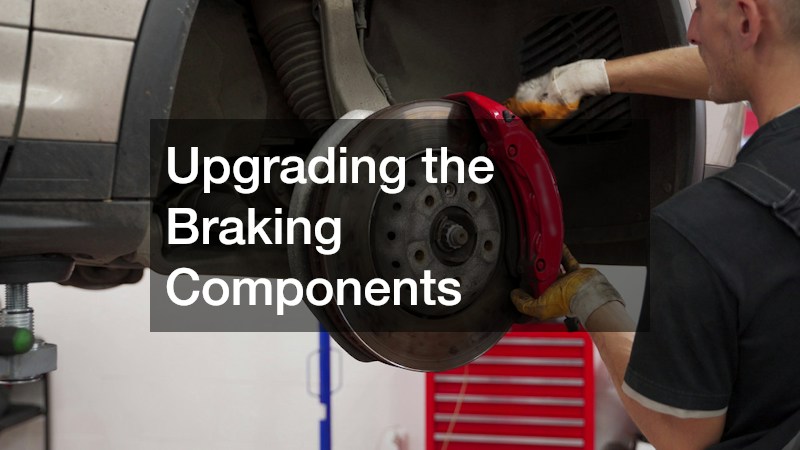
Building a high-performance vehicle requires a balanced approach, meaning that your ability to decelerate must always match your ability to accelerate. Factory braking systems are generally perfectly adequate for routine daily commuting and occasional sudden stops in traffic. However, when subjected to the intense heat and repeated heavy applications characteristic of track days or spirited driving, standard brake fluid can boil and factory pads can quickly glaze over. This phenomenon, known as brake fade, results in a spongy pedal and a terrifying loss of stopping power precisely when you need it most.
Bolstering your braking system involves stepping up to high-friction brake pads and larger rotors that can dissipate heat much more effectively. Slotted or drilled rotors help sweep away brake dust and hot gases, ensuring that the pad maintains a clean, flat contact surface against the metal. Upgrading to steel-braided brake lines will further improve pedal feel by eliminating the expansion that occurs in factory rubber hoses under high pressure. When visiting a shop for routine tire services, it is always a smart idea to have the technicians inspect your brake pad wear and fluid condition to ensure your stopping power remains uncompromised.
Replacing the Intake Manifold
Once air passes through the throttle body, it must be evenly distributed to each individual engine cylinder to ensure balanced and efficient combustion. The intake manifold is the critical component responsible for directing this airflow, but factory designs often prioritize low-end torque and manufacturing cost over high-RPM volume. Stock manifolds frequently feature long, narrow runners and are sometimes constructed from materials that are prone to heat soak, which warms the incoming air and reduces its density. Upgrading this structural piece is essential for engines that have already been modified to ingest larger volumes of air.
An aftermarket performance intake manifold is specifically engineered with larger plenums and shorter, wider runners to maximize airflow velocity at higher engine speeds. This structural change shifts the engine’s power band upwards, allowing it to continue building horsepower well past the point where the factory manifold would typically choke the airflow. Because installing a new manifold often requires rerouting vacuum lines, fuel rails, and coolant hoses, the process is quite involved and often requires the expertise of seasoned auto mechanics to guarantee a leak-free fitment. Paired with upgraded fuel injectors and a proper tune, a high-flow manifold acts as the perfect gateway for unlocking serious top-end power.
Installing a Performance Camshaft
At the very heart of your engine’s operation lies the camshaft, a crucial mechanical component that dictates exactly when and how far the intake and exhaust valves open. Factory camshafts are designed with smooth idling, strict emissions compliance, and maximum fuel efficiency in mind, which means they keep valve lift and duration relatively conservative. This factory profile restricts the volume of air and fuel that can enter the combustion chamber, essentially putting a hard cap on the engine’s power potential at higher engine speeds. By swapping out this stock component for a more aggressive profile, you can drastically alter the breathing characteristics of your motor to favor high-performance output.
Installing a performance camshaft increases both the duration that the valves stay open and the distance they lift off their seats, allowing a massive influx of air and fuel to surge into the cylinders. This modification not only yields substantial horsepower gains across the upper power band but also gives the exhaust that classic, aggressive, and lumpy idle that automotive enthusiasts instantly recognize. Unlike exterior aesthetic modifications that you might commission at a local auto body shop, a camshaft upgrade fundamentally transforms the mechanical heartbeat and auditory signature of your vehicle. It is a highly invasive procedure that usually requires upgrading supporting valvetrain components, like valve springs and pushrods, to handle the increased mechanical stress safely.
Reducing the Vehicle Weight

Weight reduction can range from simple, free modifications like removing the spare tire and heavy rear seats for weekend track days, to highly expensive investments in aerospace-grade materials. Upgrading to carbon fiber body panels, lightweight forged alloy wheels, and stripped-down racing bucket seats can shave significant weight from the car, lowering the center of gravity and reducing rotational mass. While hardcore professional racers might swap out heavy factory glass for thin polycarbonate panels during a specialized car windshield replacement, street-driven cars should always retain their safety glass and focus on shedding weight in less critical areas. Ultimately, a lighter vehicle responds more intuitively to driver inputs, making every steering and throttle adjustment feel sharper and more connected to the road.
As you embark on this automotive adventure, remember that building your ideal car is not a race, but rather a deliberate process of incremental improvements and careful tuning. Take the time to research exactly what your specific vehicle platform responds to best, and never cut corners on essential maintenance or safety upgrades just to buy the next shiny aftermarket part. By respecting the mechanical limits of your engine and focusing on a well-rounded build strategy, you will end up with a car that is not only breathtakingly fast but also reliable and deeply satisfying to drive. The true joy of vehicle modification lies in getting behind the wheel, turning the key, and feeling the tangible results of your hard work roaring to life on the open road.